NANOMORPH I: WEIRDS – CHARACTER FILES
NANOMORPH I: WEIRDS – CHARACTER FILES
NANOMORPH I: WEIRDS – CHARACTER FILES
Main Characters
The characters who carry the novel’s emotional and dramatic backbone and directly influence the direction of events are shaped along the axis of genetic transformation in a biopunk dystopia and post-human world.
Main Characters
The characters who carry the novel’s emotional and dramatic backbone and directly influence the direction of events are shaped along the axis of genetic transformation in a biopunk dystopia and post-human world.
Main Characters
The characters who carry the novel’s emotional and dramatic backbone and directly influence the direction of events are shaped along the axis of genetic transformation in a biopunk dystopia and post-human world.

Ethan Hayes
The Conscience Within the System, Guardian of a Fragile Love
Columbia University graduate Ethan Hayes is an idealistic lawyer among the "Weirds," especially known for cases defending the rights of the Grays.
Losing his family and then his grandfather at a young age has made him someone who protects his loved ones at any cost.
Although he is part of the system, he constantly experiences ethical dilemmas in processes ranging from courtrooms to public opinion manipulation. His struggle against General Ivan Sokolva and the Reds is at the center of his search for justice.
For Ethan, Mia is not just a lover, but also the safest harbor in his life. The deep bond he feels for her is at the center of all the decisions he makes.
His closest supporters are his childhood friend Austin and the disciplined financier Tyler. Ethan keeps his mental and physical strength intact by controlling his inner anger with Krav Maga.
Ethan Hayes
The Conscience Within the System, Guardian of a Fragile Love
Columbia University graduate Ethan Hayes is an idealistic lawyer among the "Weirds," especially known for cases defending the rights of the Grays.
Losing his family and then his grandfather at a young age has made him someone who protects his loved ones at any cost.
Although he is part of the system, he constantly experiences ethical dilemmas in processes ranging from courtrooms to public opinion manipulation. His struggle against General Ivan Sokolva and the Reds is at the center of his search for justice.
For Ethan, Mia is not just a lover, but also the safest harbor in his life. The deep bond he feels for her is at the center of all the decisions he makes.
His closest supporters are his childhood friend Austin and the disciplined financier Tyler. Ethan keeps his mental and physical strength intact by controlling his inner anger with Krav Maga.
Ethan Hayes
The Conscience Within the System, Guardian of a Fragile Love
Columbia University graduate Ethan Hayes is an idealistic lawyer among the "Weirds," especially known for cases defending the rights of the Grays.
Losing his family and then his grandfather at a young age has made him someone who protects his loved ones at any cost.
Although he is part of the system, he constantly experiences ethical dilemmas in processes ranging from courtrooms to public opinion manipulation. His struggle against General Ivan Sokolva and the Reds is at the center of his search for justice.
For Ethan, Mia is not just a lover, but also the safest harbor in his life. The deep bond he feels for her is at the center of all the decisions he makes.
His closest supporters are his childhood friend Austin and the disciplined financier Tyler. Ethan keeps his mental and physical strength intact by controlling his inner anger with Krav Maga.
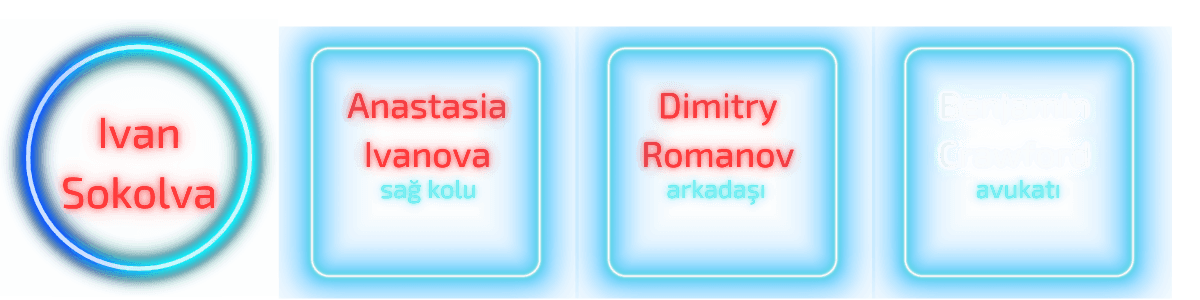
General Ivan Sokolva
A Symbol Rising from the Ashes
In the world of the Reds, General Ivan Sokolva, a charismatic and controversial leader, is a powerful figure fighting for the rights of the weirds.
However, what truly shaped him were the great losses in his past. Losing his family turned him into a stern but deeply complex character.
Anastasia Ivanova, whom he saved during the hardest moments of the transformation in Moscow, is his most trusted confidante. While he has a complex bond with Dimitry Romanov, whose life he changed, his lawyer Benjamin Crawford is his most important supporter, guiding his legal and strategic moves.
General Ivan Sokolva
A Symbol Rising from the Ashes
In the world of the Reds, General Ivan Sokolva, a charismatic and controversial leader, is a powerful figure fighting for the rights of the weirds.
However, what truly shaped him were the great losses in his past. Losing his family turned him into a stern but deeply complex character.
Anastasia Ivanova, whom he saved during the hardest moments of the transformation in Moscow, is his most trusted confidante. While he has a complex bond with Dimitry Romanov, whose life he changed, his lawyer Benjamin Crawford is his most important supporter, guiding his legal and strategic moves.
General Ivan Sokolva
A Symbol Rising from the Ashes
In the world of the Reds, General Ivan Sokolva, a charismatic and controversial leader, is a powerful figure fighting for the rights of the weirds.
However, what truly shaped him were the great losses in his past. Losing his family turned him into a stern but deeply complex character.
Anastasia Ivanova, whom he saved during the hardest moments of the transformation in Moscow, is his most trusted confidante. While he has a complex bond with Dimitry Romanov, whose life he changed, his lawyer Benjamin Crawford is his most important supporter, guiding his legal and strategic moves.

Bjørn Solberg
Patient Zero
He is the name at the symbolic center of Nanomorph history; both a “first” and a reference point for millions of people.
He is part of an unintentionally growing myth, but despite that, he is a figure who acts with a sense of responsibility and is aware of the burden he carries.
The person closest to Bjørn is Thomas Havik. Thomas is a character who balances the outside world and Bjørn, thinks more pragmatically in moments of crisis, and tries to manage emotion.
Bjørn Solberg
Patient Zero
He is the name at the symbolic center of Nanomorph history; both a “first” and a reference point for millions of people.
He is part of an unintentionally growing myth, but despite that, he is a figure who acts with a sense of responsibility and is aware of the burden he carries.
The person closest to Bjørn is Thomas Havik. Thomas is a character who balances the outside world and Bjørn, thinks more pragmatically in moments of crisis, and tries to manage emotion.
Bjørn Solberg
Patient Zero
He is the name at the symbolic center of Nanomorph history; both a “first” and a reference point for millions of people.
He is part of an unintentionally growing myth, but despite that, he is a figure who acts with a sense of responsibility and is aware of the burden he carries.
The person closest to Bjørn is Thomas Havik. Thomas is a character who balances the outside world and Bjørn, thinks more pragmatically in moments of crisis, and tries to manage emotion.
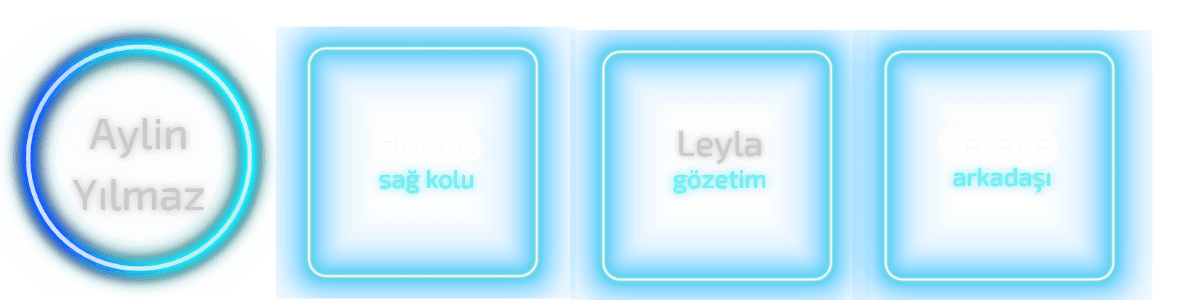
Aylin Yılmaz, a visible “Gray” figure in the political arena, brings the issue of “representation” to the center of the story through public discourse and crisis management, and takes responsibility for Leyla’s safety.
Aylin’s biggest supporter is her loyal assistant Hakan, who manages the process meticulously and maintains balance under all circumstances.
On the other hand, “Gray” singer Feraye, who tries to protect her place in the city’s chaotic streets, represents the solidarity of those left outside the system by opening her doors in difficult times and strengthens the conscientious side of this character network.
Aylin Yılmaz, a visible “Gray” figure in the political arena, brings the issue of “representation” to the center of the story through public discourse and crisis management, and takes responsibility for Leyla’s safety.
Aylin’s biggest supporter is her loyal assistant Hakan, who manages the process meticulously and maintains balance under all circumstances.
On the other hand, “Gray” singer Feraye, who tries to protect her place in the city’s chaotic streets, represents the solidarity of those left outside the system by opening her doors in difficult times and strengthens the conscientious side of this character network.
Aylin Yılmaz, a visible “Gray” figure in the political arena, brings the issue of “representation” to the center of the story through public discourse and crisis management, and takes responsibility for Leyla’s safety.
Aylin’s biggest supporter is her loyal assistant Hakan, who manages the process meticulously and maintains balance under all circumstances.
On the other hand, “Gray” singer Feraye, who tries to protect her place in the city’s chaotic streets, represents the solidarity of those left outside the system by opening her doors in difficult times and strengthens the conscientious side of this character network.
U.S. President Jonathan Reed is a pragmatic leader who, as the crisis's highest authority figure, tries to maintain diplomatic balance. Under intense pressure in the Oval Office, he makes strategic and symbolic moves to prevent the conflict from escalating into a war while managing both potential tensions and sudden intervention decisions.
However, the real center of management and implementation for the events is in the hands of New York Governor Victoria Sterling. Ambitious and career-oriented Sterling saw the Weirds event as an opportunity for her own political rise, but later, under President Reed's pressure, found herself at the center of a responsibility that needed to be brought under control.
In this process, New York Police Commissioner Jamal Williams, caught between security and ethical responsibility, clashes with the governor's political maneuvers; Mayor Brooks Harrington, on the other hand, enters the equation as a flashy, self-serving figure who tries to turn the crisis into an opportunity by using his privileged background.
U.S. President Jonathan Reed is a pragmatic leader who, as the crisis's highest authority figure, tries to maintain diplomatic balance. Under intense pressure in the Oval Office, he makes strategic and symbolic moves to prevent the conflict from escalating into a war while managing both potential tensions and sudden intervention decisions.
However, the real center of management and implementation for the events is in the hands of New York Governor Victoria Sterling. Ambitious and career-oriented Sterling saw the Weirds event as an opportunity for her own political rise, but later, under President Reed's pressure, found herself at the center of a responsibility that needed to be brought under control.
In this process, New York Police Commissioner Jamal Williams, caught between security and ethical responsibility, clashes with the governor's political maneuvers; Mayor Brooks Harrington, on the other hand, enters the equation as a flashy, self-serving figure who tries to turn the crisis into an opportunity by using his privileged background.
U.S. President Jonathan Reed is a pragmatic leader who, as the crisis's highest authority figure, tries to maintain diplomatic balance. Under intense pressure in the Oval Office, he makes strategic and symbolic moves to prevent the conflict from escalating into a war while managing both potential tensions and sudden intervention decisions.
However, the real center of management and implementation for the events is in the hands of New York Governor Victoria Sterling. Ambitious and career-oriented Sterling saw the Weirds event as an opportunity for her own political rise, but later, under President Reed's pressure, found herself at the center of a responsibility that needed to be brought under control.
In this process, New York Police Commissioner Jamal Williams, caught between security and ethical responsibility, clashes with the governor's political maneuvers; Mayor Brooks Harrington, on the other hand, enters the equation as a flashy, self-serving figure who tries to turn the crisis into an opportunity by using his privileged background.
Main Characters
Names that carry the emotional and dramatic backbone of the novel and directly affect the direction of events.
Gray Woman
One of the "Grays" transformed by the nanomorph. While trying to cope with fatigue, concern for visibility, and fear of exclusion, she holds on to the idea of "healing". One of the strongest aspects of the story is Mia's challenging relationship with her body, desires, and survival instinct.
Ethan Hayes
A lawyer with strong ideals rising in the legal world. Trapped between the struggle for the weirds' rights, propaganda wars, and pressure from power centers; his search for justice clashes with personal loyalties. Ethan's path closely showcases the "system" side of the novel—courts, institutions, and public opinion mechanisms.
Anastasia Ivanova
One of the most influential figures among the Reds: disciplined, strategic, and cold-blooded. Master at reading power dynamics; harsh when needed, convincing when necessary. Throughout the novel, she stands like the human image of the thin line between "protection" and "control".
General Ivan Sokolva
A charismatic authority figure in the world of the Reds. Contentious in public opinion, but a leader—even a symbol—for his own circle. The novel positions General not just as a symbol of power, but as a complex character moving under the burdens of the past and the pressure of grand goals.
Prominent Side Characters
Names that deepen the main axis, escalate the conflict, and expand the universe.
Benjamin Crawford
An experienced lawyer alongside the General. Carries the tension of legal insights, "pragmatism," and conscience. Represents the behind-the-scenes negotiations, gray areas, and necessities.
Bjørn Solberg
The name at the symbolic center of nanomorph history: both a "first" and a reference point for millions. A figure moving with a sense of responsibility inside a myth growing unintentionally.
Thomas Havik
The person closest to Bjørn; one of the balancing elements between the outside world and Bjørn. A character who thinks more "practically" and tries to manage emotions during crises.
Dimitry Romanov
One of the heavy players behind the scenes. Standing at the intersection of power, science, and ideology; depicted as a figure continuously feeding the tension with big goals and debatable methods.
Triads (Aneta, Violeta, Iveta)
Three Red scientists who greatly resemble each other. Bring the side of research, the tension between "scientific language" and "political goals," and the cold logic of the laboratory into the story.
Sora (Artificial Intelligence Support System)
A digital support voice found in the ears/lives of some characters. An element that constantly raises questions about therapy, addiction, control, and the boundaries of a "non-human entity that talks like a human."
Leyla
A being that resembles a human but does not fit fully into the "human" category, one of the universe's most intriguing entities. Represents the "future" side of the novel, namely the potential of the nanomorph and the area where ethical discussions become sharp.
Aylin Yılmaz
A visible weird figure in the political arena. A character that brings the issue of public language, crisis management, and "representation" closer to the center of the novel.
Supporting Cast (World Founding Characters)
Names that strengthen the social ground, security dimension, and the tone of everyday life in the story.
Walter & Joe: Characters showing the tension on the security/police line and the state reflex in the field.
Victoria Sterling, Jamal Williams, Brooks Harrington: Political/bureaucratic faces representing how management and reputation calculations work in times of crisis.
Dr. Mendez, Klaus Reinhardt: Names carrying "institutional language," conflict of interest, and the tension of medicine-industry on the BioCure axis.
Siobhan O’Connor: A character making the cultural reflections of the weird identity visible through the public figure/performance area.
Austin & Tyler (Ethan’s circle), Stella (bar employee): Side characters carrying more "human," everyday moments of normalization and prejudice.
Ezekiel, Divine Watchers line: Figures representing how the religious/radical language amplifies societal polarization.
Michael, Emily Porter, Friedrich: A character line feeding the tension through the search for information, lost connections, and clues extending to the "big picture."
Feraye: A short but very effective side character; 'the conscience of the street'.
💡 Short Reading Key
These characters are positioned in two major axes:
Body and identity (Mia, Leyla, Bjørn)
Power, law, and narrative management (Ethan, Anastasia, General, Benjamin, Dimitry)
The novel's pace rises with the constant friction between these two axes.
Supporting Cast (World-Building Characters)
Names that strengthen the story's social foundation, security dimension, and everyday-life tone.
Triads (Aneta, Violeta, Iveta)
Identical triplets, Red scientists. They bring the research side, the tension between “scientific language” and “political goals,” and the cold logic of the laboratory into the story.
Sora (AI support system)
A digital support voice present in some characters' ears/lives. An element that continually raises questions about therapy, dependence, control, and the limits of a being that “speaks like a human but is not human.”
Walter & Joe: Characters on the security/police line, showing field tension and the state's reflex.
Dr. Mendez, Klaus Reinhardt: Names in the BioCure axis that carry “institutional language,” conflicts of interest, and the tension between medicine and industry.
Siobhan O’Connor: A character who makes the cultural reflections of the Weird identity visible through the public figure/performance arena.
Stella (bar employee): Secondary characters that carry moments of normalization and prejudice at a more “human,” everyday level.
Ezekiel, the Divine Watchers line: Figures representing how religious/radical language deepens social polarization.
Michael, Emily Porter, Friedrich: A character line that feeds tension through the search for information, missing connections, and clues leading to the “big picture.”
Feraye: A brief but very impactful supporting character; the ‘conscience of the street’.
Short reading key
These characters are positioned along two major axes:
Body and identity (Mia, Leyla, Bjørn)
Power, law, and narrative control (Ethan, Anastasia, General, Benjamin, Dimitry)
The novel's pace rises from the constant friction between these two axes.
Supporting Cast (World-Building Characters)
Names that strengthen the story's social foundation, security dimension, and everyday-life tone.
Triads (Aneta, Violeta, Iveta)
Identical triplets, Red scientists. They bring the research side, the tension between “scientific language” and “political goals,” and the cold logic of the laboratory into the story.
Sora (AI support system)
A digital support voice present in some characters' ears/lives. An element that continually raises questions about therapy, dependence, control, and the limits of a being that “speaks like a human but is not human.”
Walter & Joe: Characters on the security/police line, showing field tension and the state's reflex.
Dr. Mendez, Klaus Reinhardt: Names in the BioCure axis that carry “institutional language,” conflicts of interest, and the tension between medicine and industry.
Siobhan O’Connor: A character who makes the cultural reflections of the Weird identity visible through the public figure/performance arena.
Stella (bar employee): Secondary characters that carry moments of normalization and prejudice at a more “human,” everyday level.
Ezekiel, the Divine Watchers line: Figures representing how religious/radical language deepens social polarization.
Michael, Emily Porter, Friedrich: A character line that feeds tension through the search for information, missing connections, and clues leading to the “big picture.”
Feraye: A brief but very impactful supporting character; the ‘conscience of the street’.
Short reading key
These characters are positioned along two major axes:
Body and identity (Mia, Leyla, Bjørn)
Power, law, and narrative control (Ethan, Anastasia, General, Benjamin, Dimitry)
The novel's pace rises from the constant friction between these two axes.


