
• Nanomorph Series Continues • Nanomorph I - Weirds Coming Soon • New volumes and side stories coming soon • Follow the Nanomorph universe • Our book sales points: D&R - Kitap Yurdu - Trendyol - Idefix
NANOMORF I - WEIRDS
THE AGE OF GRAYS AND REDS
NANOMORF I - WEIRDS
THE AGE OF GRAYS AND REDS
NANOMORF I - WEIRDS
THE AGE OF GRAYS AND REDS
A world where the human body is rewritten: Nanomorph.
This high-paced science fiction series from the pen of mathematician Vural Aksankur narrates a dark future where biological boundaries blur due to a transformation initiated by a cell from the past in the DNA.
This story, where technology, genetic intervention, and human nature are intertwined, transforms Nanomorph into not just science fiction, but a striking dystopia that harshly questions “what does it mean to remain human?”
Now the world is divided into three:
Ordinary people, physically enhanced but depleted “Grays” and those with high energy and sharp intelligence “Reds”.
A world where the human body is rewritten: Nanomorph.
This high-paced science fiction series from the pen of mathematician Vural Aksankur narrates a dark future where biological boundaries blur due to a transformation initiated by a cell from the past in the DNA.
This story, where technology, genetic intervention, and human nature are intertwined, transforms Nanomorph into not just science fiction, but a striking dystopia that harshly questions “what does it mean to remain human?”
Now the world is divided into three:
Ordinary people, physically enhanced but depleted “Grays” and those with high energy and sharp intelligence “Reds”.
A world where the human body is rewritten: Nanomorph.
This high-paced science fiction series from the pen of mathematician Vural Aksankur narrates a dark future where biological boundaries blur due to a transformation initiated by a cell from the past in the DNA.
This story, where technology, genetic intervention, and human nature are intertwined, transforms Nanomorph into not just science fiction, but a striking dystopia that harshly questions “what does it mean to remain human?”
Now the world is divided into three:
Ordinary people, physically enhanced but depleted “Grays” and those with high energy and sharp intelligence “Reds”.

The groundbreaking science fiction novel released by Edebiyatist in March 2026:
This 327-page science fiction work, which blends the horror of genetic "değişikler" with a modern biopunk aesthetic, transports the reader to the heart of a high-tension dystopia where human DNA is rewritten and biological limits are pushed.
The novel combines the emotion of an impossible love with the intrigues of giant corporations waging global power struggles, offering readers a gripping science fiction experience that questions genetic "değişikler," biopunk dystopia, and moral-ethical dilemmas.
The groundbreaking science fiction novel released by Edebiyatist in March 2026:
This 327-page science fiction work, which blends the horror of genetic "değişikler" with a modern biopunk aesthetic, transports the reader to the heart of a high-tension dystopia where human DNA is rewritten and biological limits are pushed.
The novel combines the emotion of an impossible love with the intrigues of giant corporations waging global power struggles, offering readers a gripping science fiction experience that questions genetic "değişikler," biopunk dystopia, and moral-ethical dilemmas.
The groundbreaking science fiction novel released by Edebiyatist in March 2026:
This 327-page science fiction work, which blends the horror of genetic "Değişikler" with a modern biopunk aesthetic, transports the reader to the heart of a high-tension dystopia where human DNA is rewritten and biological limits are pushed.
The novel combines the emotion of an impossible love with the intrigues of giant corporations waging global power struggles, offering readers a gripping science fiction experience that questions genetic "Değişikler," biopunk dystopia, and moral-ethical dilemmas.

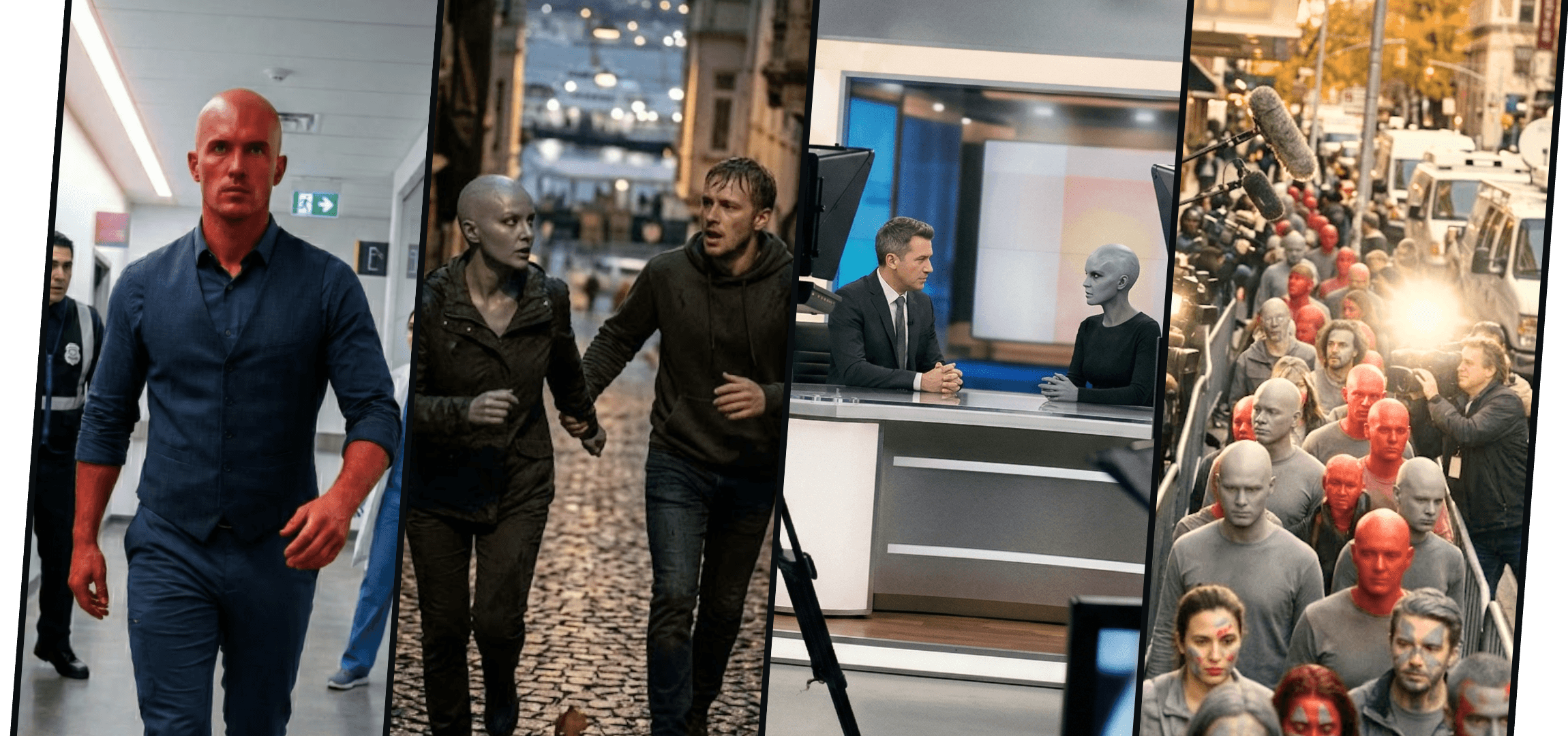
The story opens in the late 2030s, during a time when the world is shaken by a new biological phenomenon: a microscopic entity known as nanomorph that leads to radical transformations in the human body. This “transformation” produces two main phenotypes:
Grays: A new group of individuals whose appearance and physiology have changed, living with reduced energy and chronic fatigue, and are both a curiosity and outcasts to society.
Reds: Much rarer; evoking both admiration and fear in the public with their high energy, sharp intelligence, and alleged “superiority” narrative.
Within this new order, society divides into (or perhaps more) those who accept, those who fear, those who hate, and those who derive power from this chaos.
The focus characters and conflict take the reader on a high-tension post-human sci-fi journey. The text runs several lines in parallel.
The Gray woman lives with the physical exhaustion, stigma, and loneliness that come with being weird. Even simple scenes of daily life (shopping, walking on the street, making eye contact with people) are a challenge for her. Her story closely shows that the transformation is not only biological but also a psychological and social disaster.
Young attorney Ethan Hayes finds himself in a case that will determine the future of the weirds, caught in the midst of media manipulation, document wars, and conflicts between power centers. Where the law fails to reveal the “truth,” who controls the narrative becomes decisive.
Reds and organized power: “protection” or “dominance?”
While the Reds claim to care for the Grays, a whisper grows outside:
“Is this help not a project of power?”
The novel's pace feeds on this: Who is well-intentioned, who is opportunistic is not clear; the reader searches for truth in the constantly shifting balances.
The dark dystopia of Black Mirror, the tension of Jurassic Park, and much more come together in Nanomorph.
The story opens in the late 2030s, during a time when the world is shaken by a new biological phenomenon: a microscopic entity known as nanomorph that leads to radical transformations in the human body. This “transformation” produces two main phenotypes:
Grays: A new group of individuals whose appearance and physiology have changed, living with reduced energy and chronic fatigue, and are both a curiosity and outcasts to society.
Reds: Much rarer; evoking both admiration and fear in the public with their high energy, sharp intelligence, and alleged “superiority” narrative.
Within this new order, society divides into (or perhaps more) those who accept, those who fear, those who hate, and those who derive power from this chaos.
The focus characters and conflict take the reader on a high-tension post-human sci-fi journey. The text runs several lines in parallel.
The Gray woman lives with the physical exhaustion, stigma, and loneliness that come with being weird. Even simple scenes of daily life (shopping, walking on the street, making eye contact with people) are a challenge for her. Her story closely shows that the transformation is not only biological but also a psychological and social disaster.
Young attorney Ethan Hayes finds himself in a case that will determine the future of the weirds, caught in the midst of media manipulation, document wars, and conflicts between power centers. Where the law fails to reveal the “truth,” who controls the narrative becomes decisive.
Reds and organized power: “protection” or “dominance?”
While the Reds claim to care for the Grays, a whisper grows outside:
“Is this help not a project of power?”
The novel's pace feeds on this: Who is well-intentioned, who is opportunistic is not clear; the reader searches for truth in the constantly shifting balances.
The dark dystopia of Black Mirror, the tension of Jurassic Park, and much more come together in Nanomorph.
The story opens in the late 2030s, during a time when the world is shaken by a new biological phenomenon: a microscopic entity known as nanomorph that leads to radical transformations in the human body. This “transformation” produces two main phenotypes:
Grays: A new group of individuals whose appearance and physiology have changed, living with reduced energy and chronic fatigue, and are both a curiosity and outcasts to society.
Reds: Much rarer; evoking both admiration and fear in the public with their high energy, sharp intelligence, and alleged “superiority” narrative.
Within this new order, society divides into (or perhaps more) those who accept, those who fear, those who hate, and those who derive power from this chaos.
The focus characters and conflict take the reader on a high-tension post-human sci-fi journey. The text runs several lines in parallel.
The Gray woman lives with the physical exhaustion, stigma, and loneliness that come with being weird. Even simple scenes of daily life (shopping, walking on the street, making eye contact with people) are a challenge for her. Her story closely shows that the transformation is not only biological but also a psychological and social disaster.
Young attorney Ethan Hayes finds himself in a case that will determine the future of the weirds, caught in the midst of media manipulation, document wars, and conflicts between power centers. Where the law fails to reveal the “truth,” who controls the narrative becomes decisive.
Reds and organized power: “protection” or “dominance?”
While the Reds claim to care for the Grays, a whisper grows outside:
“Is this help not a project of power?”
The novel's pace feeds on this: Who is well-intentioned, who is opportunistic is not clear; the reader searches for truth in the constantly shifting balances.
The dark dystopia of Black Mirror, the tension of Jurassic Park, and much more come together in Nanomorph.
Reader comments
"You are not just reading an engaging science fiction; you are witnessing an incredible societal critique through Grays and Reds. The dirty games of media and politics are portrayed so realistically that I shivered while reading. If you love dystopias, definitely don't miss it."
"The idea of the nanomorph is built on a very solid foundation, and while reading, you say, 'could something like this really happen to us?' The story gained momentum at such a point that I am eagerly awaiting the second book!"
"The focus on not just the action, but also on sociological and psychological details has made the book very strong. The manipulations of the Reds and the desperation of the Grays come across very well to the reader. It's a novel with a well-functioning plot and a very enjoyable read."
Reader comments
"You are not just reading an engaging science fiction; you are witnessing an incredible societal critique through Grays and Reds. The dirty games of media and politics are portrayed so realistically that I shivered while reading. If you love dystopias, definitely don't miss it."
"The idea of the nanomorph is built on a very solid foundation, and while reading, you say, 'could something like this really happen to us?' The story gained momentum at such a point that I am eagerly awaiting the second book!"
"The focus on not just the action, but also on sociological and psychological details has made the book very strong. The manipulations of the Reds and the desperation of the Grays come across very well to the reader. It's a novel with a well-functioning plot and a very enjoyable read."
Reader comments
"You are not just reading an engaging science fiction; you are witnessing an incredible societal critique through Grays and Reds. The dirty games of media and politics are portrayed so realistically that I shivered while reading. If you love dystopias, definitely don't miss it."
"The idea of the nanomorph is built on a very solid foundation, and while reading, you say, 'could something like this really happen to us?' The story gained momentum at such a point that I am eagerly awaiting the second book!"
"The focus on not just the action, but also on sociological and psychological details has made the book very strong. The manipulations of the Reds and the desperation of the Grays come across very well to the reader. It's a novel with a well-functioning plot and a very enjoyable read."


